ZLTD Uses an Inclined Balance to Define Its Own Manufacturing Logic
ZLTD’s Series 2 uses a 20-degree inclined balance, dial-side mechanics and workshop-made movement structures while retaining an ETA 6498 gear train. That boundary is central to the watch: serviceable supplied components coexist with a distinctive regulating architecture and manufacturing tools built by the young independent.
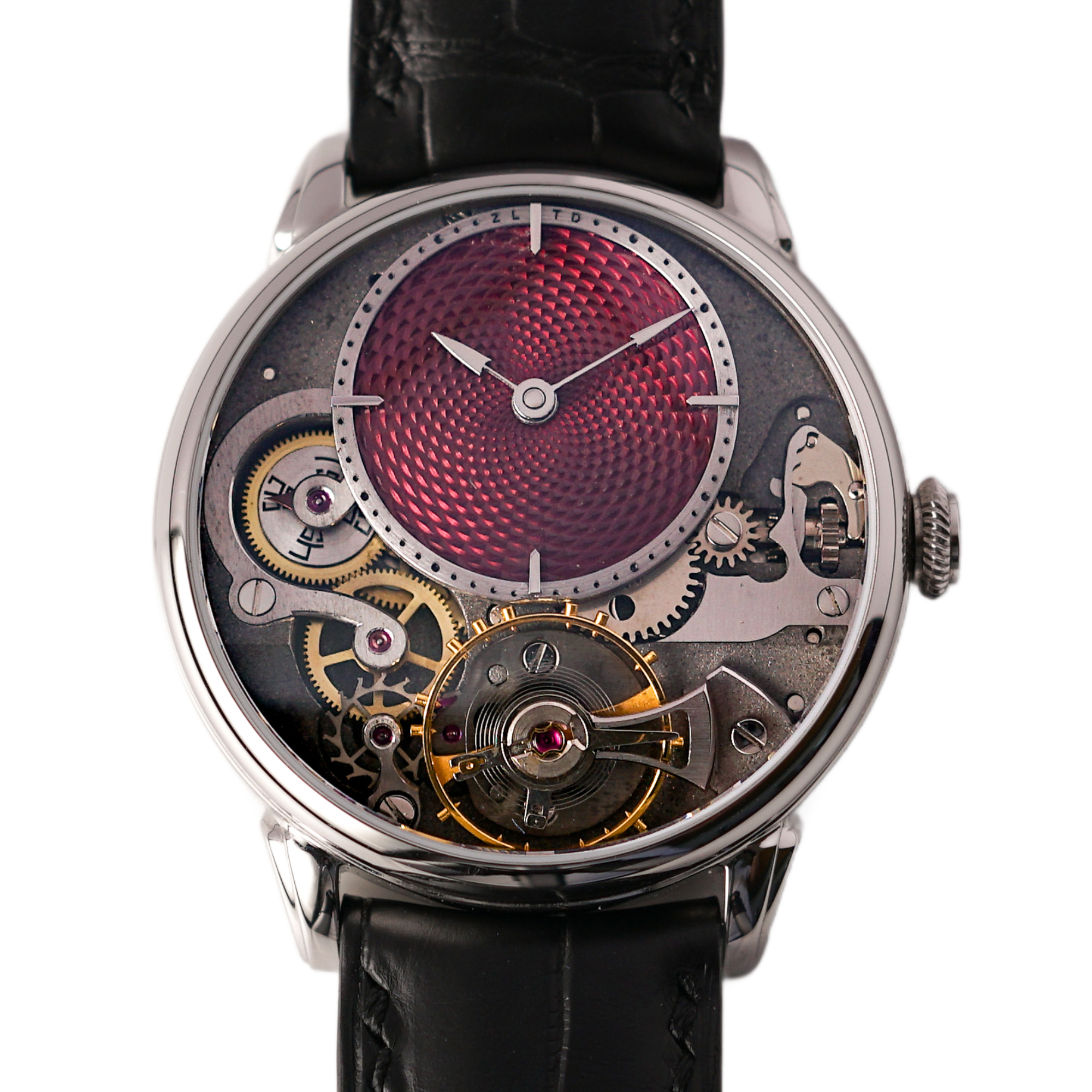
In brief. ZLTD’s Series 2 is compelling because it draws a precise boundary around authorship: an established ETA gear train remains for serviceability, while the balance architecture, bridges, manufacturing tools and finishing become the founders’ own argument.[1] [2] [3] [4] [5] [6] [7] [8]
A Singapore-Canadian Workshop Model
The ZLTD Series 2 uses the RD01 movement with a screw balance inclined at 20 degrees. ZLTD says the inclined balance is intended to average positional errors caused by gravity as well as create visual impact.[1] [2]
The Singapore-Canadian structure divides creative and manufacturing work across founders and locations rather than imitating a large integrated manufacture. The RD01 movement and inclined balance give that collaboration a clear technical centre. The workshop model matters because capacity and support depend directly on a very small team.[1] [2]
For collectors, the relevant task is to separate what the sources document from what still requires experience. Introduce Kenny Toh, Raf Dzwonek and the division between design, manufacturing and finishing. The cited material establishes these points, but it does not support broader claims about long-term ownership, measured performance or future market value.[1] [2]
What the 20-Degree Balance Is Intended to Do
The movement retains an ETA 6498 gear train for serviceability while components outside the gear train are produced in the Calgary workshop. ZLTD designed and built its own CNC equipment for manufacturing the movement’s mainplates and bridges.[3] [4]
ZLTD says inclination is intended to average some gravity-related positional errors, and the angle also provides strong visual theatre. Those are separate propositions. The architecture is clearly visible and distinctive, while the chronometric benefit remains a stated rationale until independent multi-position timing data is published.[3] [4]
For collectors, the relevant task is to separate what the sources document from what still requires experience. Separate the stated chronometric rationale from the visual effect and untested claims. The cited material establishes these points, but it does not support broader claims about long-term ownership, measured performance or future market value.[3] [4]
The ETA Gear Train and the In-House Boundary
The watch measures 40 mm across, 45.5 mm lug to lug and 10.5 mm thick. Dial options include rose-engine hand guilloché and brushed anodised titanium in aubergine or blue.[5] [6]
Retaining an ETA 6498 gear train is a deliberate boundary, not a hidden shortcut. Familiar train components may support future service, while plates, bridges and much of the surrounding architecture express the founders’ authorship. Building CNC equipment for those structures deepens that claim without changing the supplied origin of the train.[5] [6]
For collectors, the relevant task is to separate what the sources document from what still requires experience. Explain what remains supplied and what ZLTD manufactures or modifies. The cited material establishes these points, but it does not support broader claims about long-term ownership, measured performance or future market value.[5] [6]
A Technical Display That Still Has to Wear
Production is limited to 20 pieces for 2026 at USD 7,500 before tax, with a 50 percent deposit and an estimated six-to-seven-month delivery period. The Series 2 appears as a dedicated entry in the GPHG 2026 competition, creating the current reason to revisit the earlier technical interview.[7] [8]
The 40 mm by 45.5 mm case keeps the technical display within moderate dimensions, and dial options change how strongly the mechanism dominates. Guilloché offers traditional texture, while anodised titanium gives a more industrial colour field. Wearability still cannot be established from measurements and imagery alone.[7] [8]
For collectors, the relevant task is to separate what the sources document from what still requires experience. Cover the rotating seconds display, dial choices and compact case proportions. The cited material establishes these points, but it does not support broader claims about long-term ownership, measured performance or future market value.[7] [8]
Twenty Pieces, a GPHG Entry and the Evidence Gap
The ZLTD Series 2 uses the RD01 movement with a screw balance inclined at 20 degrees. ZLTD says the inclined balance is intended to average positional errors caused by gravity as well as create visual impact.[1] [2]
Twenty pieces at USD 7,500 define a small but not purely conceptual production run. The deposit and estimated delivery period expose the capacity commitment. The GPHG entry explains renewed attention, but it is not an award and does not close the evidence gap around timing performance or actual delivery cadence.[1] [2]
For collectors, the relevant task is to separate what the sources document from what still requires experience. Assess price, capacity, current recognition and the absence of independent timing data. The claimed positional benefit has not been supported by published independent timing data, the GPHG entry is not an award, and delivery timing remains an estimate from the maker.[1] [2]
The Dial Brief view
The Series 2 offers a useful middle ground between an off-the-shelf calibre and a claim of total manufacture. Collectors can value the inclined balance, custom bridges and in-house machining without pretending the gear train has a different origin. The open questions are chronometric proof, delivery consistency and long-term support. A GPHG entry supplies visibility, not independent validation of performance.
What we know, and what remains unconfirmed
The claimed positional benefit has not been supported by published independent timing data, the GPHG entry is not an award, and delivery timing remains an estimate from the maker.