Sea-Gull Moves the 1963 Chronograph Upmarket From the Inside
The 1963B keeps the compact pilot-watch outline but gives its ST1901 calibre hand finishing, a swan-neck regulator and a more serious case. The upgrade reframes one of China’s best-known mechanical watches as a manufacturing story rather than merely an inexpensive route into column-wheel chronographs.
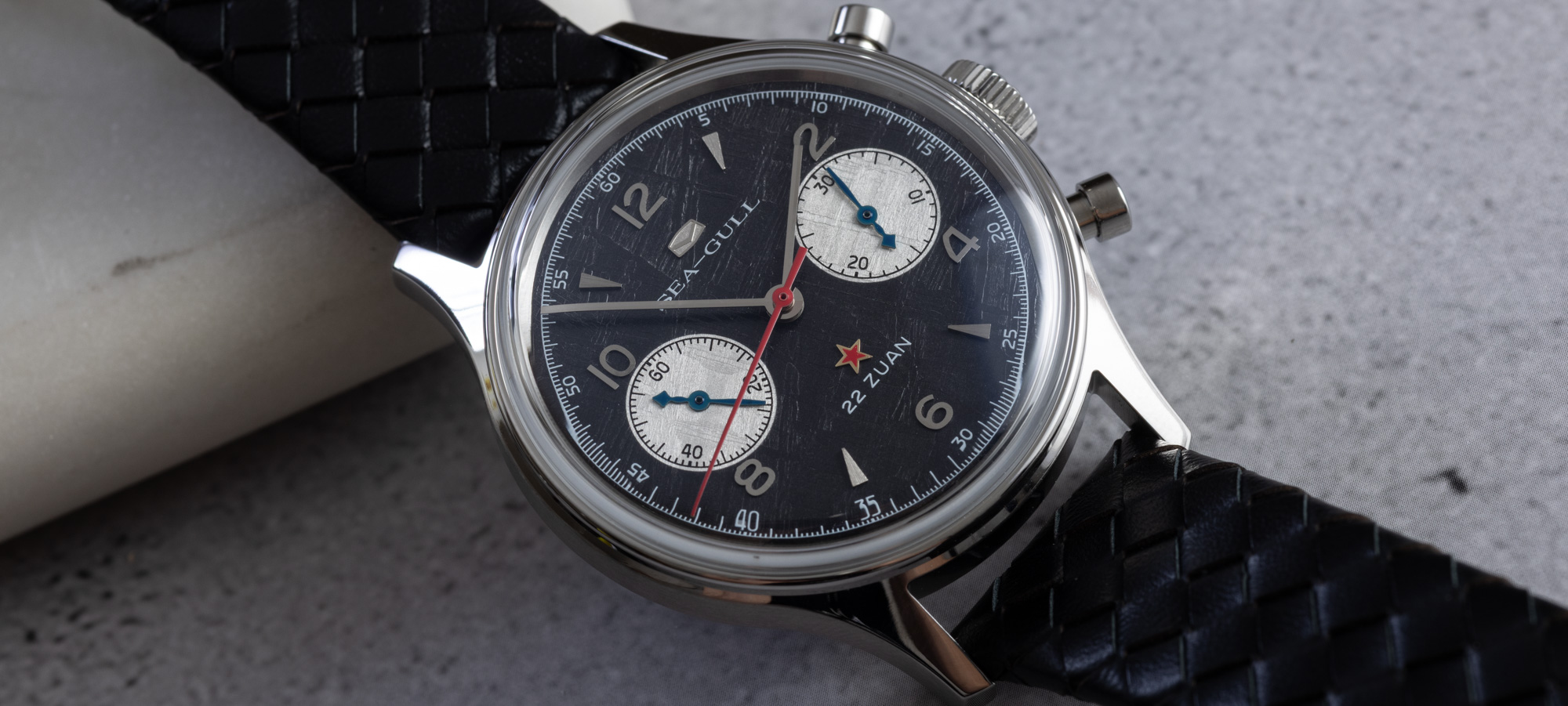
In brief. The 1963B is useful now because it shows Chinese watchmaking moving upmarket through execution rather than borrowed prestige: the familiar ST1901 architecture receives finishing, regulation and case work intended to survive comparison through a display back.[1] [2] [3] [4] [5] [6] [7] [8]
From Venus 175 Machinery to the ST19 Family
The ST19 movement family traces to machinery and technical rights transferred from Swiss maker Venus to the Tianjin Watch Factory. The 1963 name refers to early ST19 prototype development for a Chinese aviation chronograph programme.[1] [2]
The ST19 story begins with transferred machinery and technical rights, then continues through Chinese development. That lineage is more specific than a vague appeal to aviation heritage. The 1963 name points toward an early programme, but qualified historical reporting should remain qualified rather than hardened into an exact origin myth.[1] [2]
The transferred Venus foundation is well documented, but the exact 1963 programme history is reported with qualifications. That distinction matters. The ST19 should be credited as a Chinese industrial continuation and development, without turning every repeated origin detail into settled archival fact.[1] [2]
What “Top Grade” Changes in the ST1901
The Top Grade ST1901 remains a hand-wound 3 Hz column-wheel chronograph architecture. Upgrades include hand-applied anglage, Geneva-style striping, perlage, brushing and rhodium-plated bridge surfaces.[3] [4]
Top Grade does not replace the ST1901 architecture. It changes how that architecture is finished and presented through anglage, striping, perlage, brushing and plated bridge surfaces. This is an execution argument: collectors can inspect whether additional labour makes a familiar column-wheel chronograph more persuasive through the display back.[3] [4]
The added anglage, striping, perlage and plating are visible through the rear crystal, so buyers can inspect much of the upgrade directly. A swan-neck regulator and decorated surfaces still need careful adjustment and consistent execution. Finishing is evidence of labour, not automatic evidence of better timekeeping.[3] [4]
A Compact Case With More Serious Hardware
The 1963B case measures 37.3 mm across, about 47 mm lug to lug and approximately 15 mm including its box sapphire crystal. The case uses front and rear sapphire crystals and is rated to 5 bar.[5] [6]
The redesigned case stays compact in diameter but becomes substantial once the box crystal is included. Sapphire front and rear and a 5-bar rating provide a practical hardware baseline. Thickness and long lugs still need wrist evaluation, especially because a small dial diameter does not automatically guarantee unobtrusive wear.[5] [6]
The box crystal makes the 37.3 mm diameter sound slimmer than the complete watch will feel. At roughly 15 mm thick and 47 mm long, the 1963B has compact width but substantial height. The 5-bar rating improves practicality without making it a water-focused chronograph.[5] [6]
Six Dial Directions, Including Meteorite
Six dial styles are listed, including classic, panda, pink, green, blue and meteorite. The reviewed meteorite version is limited to 500 pieces at USD 1,300, while standard variants were reported at USD 839.[7] [8]
Six dial directions broaden the product beyond one military-coded appearance. Meteorite adds material variation and a fixed limit, while standard colours offer the upgraded movement without the same scarcity claim. Buyers should separate the value of the calibre work from the novelty or rarity of the dial selected.[7] [8]
The meteorite version adds both material variation and a 500-piece limit, while the standard dials give access to the same Top Grade movement at a lower reported price. Buyers can therefore separate scarcity from mechanical execution instead of treating the most expensive dial as the only serious version.[7] [8]
Why an Upmarket Chinese Chronograph Matters
The ST19 movement family traces to machinery and technical rights transferred from Swiss maker Venus to the Tianjin Watch Factory. The 1963 name refers to early ST19 prototype development for a Chinese aviation chronograph programme.[1] [2]
Moving above the traditional price of an ST19 watch tests whether Chinese chronograph production can command a premium for visible execution. The proposition is credible on specification, but independent rate results, service experience and long-term corrosion evidence remain absent. Upmarket positioning must ultimately be earned through those ownership outcomes.[1] [2]
The price step asks collectors to judge Sea-Gull on finishing, regulation and case work rather than on low cost alone. That is a harder but more useful comparison. Independent rate data, service experience and consistency across examples will decide whether the premium survives ownership.[1] [2]
The Dial Brief view
The ST19 story begins with transferred machinery and technical rights, then continues through Chinese development. That lineage is more specific than a vague appeal to aviation heritage. The 1963 name points toward an early programme, but qualified historical reporting should remain qualified rather than hardened into an exact origin myth. The redesigned case stays compact in diameter but becomes substantial once the box crystal is included. Sapphire front and rear and a 5-bar rating provide a practical hardware baseline. Thickness and long lugs still need wrist evaluation, especially because a small dial diameter does not automatically guarantee unobtrusive wear.
What we know, and what remains unconfirmed
Historical dates in the independent review are partly qualified, the official product page contains promotional performance language without independent rate results, and long-term service evidence for the Top Grade calibre is not yet available.