Inside Formex, the Aria Makes Vertical Integration Wearable
The Formex Aria Manufacture Chronometer is made through a visible Biel network: Formex directs design, development and assembly, Dexel contributes component expertise, and the exclusive FX01 adapts Horage micro-rotor architecture. The result is a 40 mm Grade 5 titanium watch that is only 6.9 mm thick, linking case construction and calibre choice instead of presenting them as unrelated specifications.
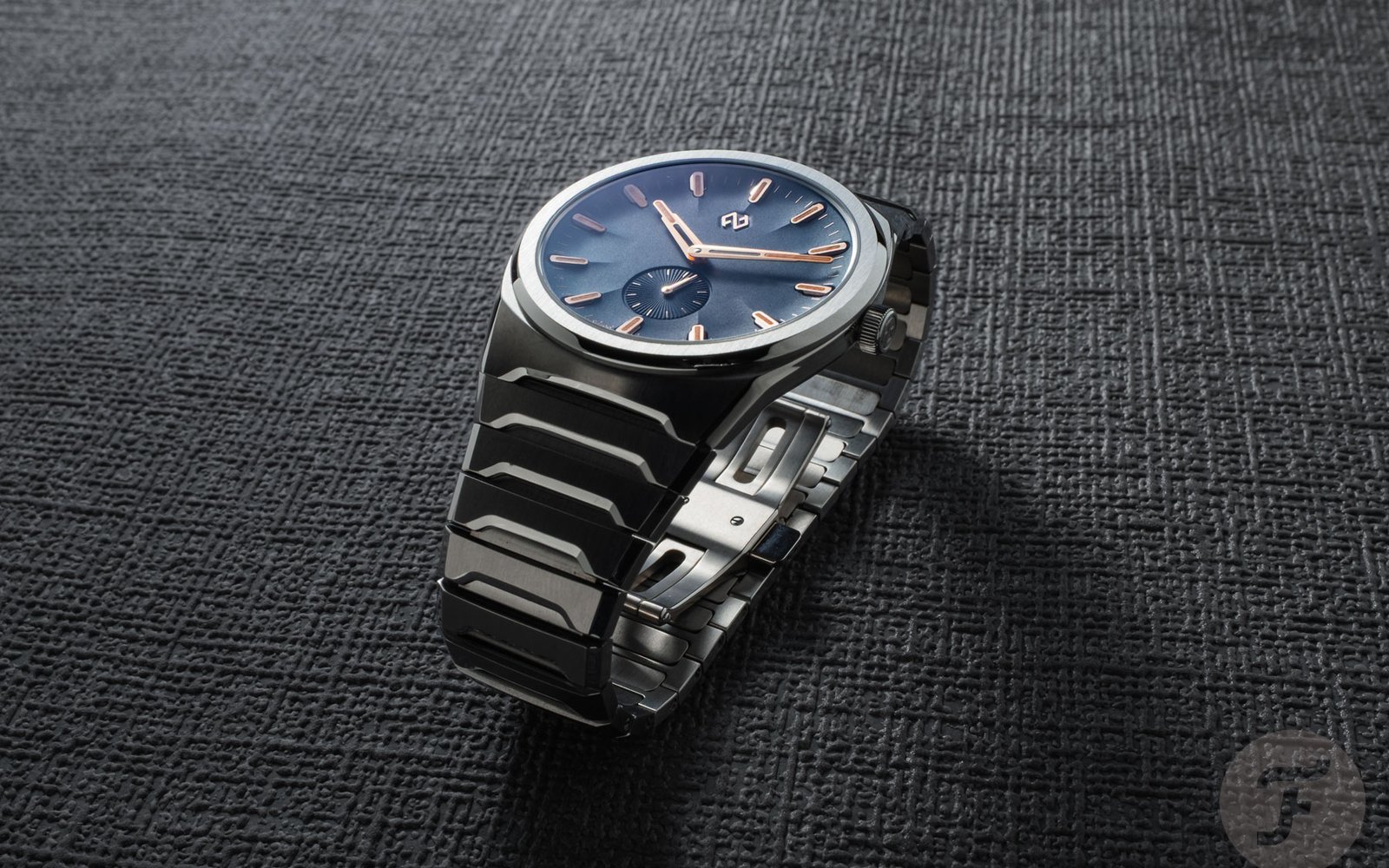
In brief. The Aria matters because Formex has made its manufacturing network visible in the watch itself: Dexel's component expertise, a Horage-derived micro-rotor calibre and a 6.9 mm titanium case operate as one industrial argument rather than three isolated specifications.[1] [2] [3] [4] [5] [6] [7] [8]
Details from every angle
Why the Manufacture Visit Changes the Aria
Formex was founded in 1999 and operates from Biel as an independent watch company with an engineering-led identity. That background matters here because the Aria is easier to understand as a product of connected manufacturing decisions than as a list of premium features. The visit report puts those decisions in one place, showing the company, its headquarters and the neighbouring expertise behind the case and bracelet. It also makes the chain of responsibility more legible: Formex remains the watch brand and product developer, while specialist component production sits beside it rather than disappearing behind a vague claim of manufacture status.[1] [2] [3]
That visibility comes with an important qualification. The first-hand report was published as a disclosed partnership, so it offers access and direct explanation rather than the distance of an independent review. Its value is therefore operational: it shows where the businesses work, what each says it does and how the Aria moves through that network. It cannot establish long-term reliability, comfort or comparative finishing. Reading it this way strengthens the article, because the evidence supports a precise manufacturing map without asking the visit to prove qualities it did not test.[2] [3]
Dexel and Formex Share Infrastructure, Not Identity
Formex's headquarters is shared with Dexel, a component maker founded by the father of Formex chief executive Raphael Granito, but the two remain separate companies. That distinction prevents a familiar category error. Physical proximity and family history do not make Dexel an internal department, and they do not turn every supplied part into evidence of complete vertical integration. What the arrangement does provide is an unusually short line between the brand developing the watch and the specialist business producing difficult external components.[2]
The division of work is concrete. Dexel produces cases, bracelets, clasps and precision parts, while Formex handles design, development and assembly at the Biel site. For the Aria, this makes the network visible in the object: a thin titanium case, an integrated bracelet and the final assembled watch can be considered as related engineering tasks even though corporate responsibility stays divided. The collector-facing point is not that Formex does everything itself. It is that the brand can coordinate closely with a component specialist and explain where the boundary lies.[2] [3]
A 6.9 mm Titanium Case as an Engineering Brief
The Aria case measures 40 mm across and 6.9 mm thick in Grade 5 titanium, with a stated weight of about 78 g on its bracelet. Each number contributes to the same brief. Forty millimetres gives the watch conventional contemporary presence, while the thickness asks the case, movement and display stack to occupy much less vertical space than many automatic watches. The low mass follows from titanium, but it also makes the bracelet part of the proposition: the quoted weight describes the complete watch on metal rather than a head-only figure.[5]
Those specifications do not prove how the Aria feels on a wrist, and the sources do not support a comfort verdict. They do show why component coordination matters. A 6.9 mm total thickness leaves less freedom to treat the calibre, case middle, crystal and back as independent modules. The manufacturing story is therefore persuasive when kept narrow: Grade 5 titanium, a thin profile and a complete bracelet weight are stated outcomes of one package. Whether the execution feels refined over years of use remains outside the available evidence.[5]
What the FX01 Adds Beyond a New Calibre Name
The Aria is the first Formex watch fitted with the exclusive FX01 calibre. Its architecture is based on Horage's K2 micro-rotor platform, a lineage that should stay explicit whenever the movement is described. Exclusive means this execution belongs to Formex; it does not mean the underlying architecture was wholly created inside Formex. That distinction makes the technical claim more useful, not less, because it explains how a relatively small independent brand can obtain a thin automatic layout suited to the case without pretending that the calibre appeared from an isolated in-house programme.[4]
The FX01 uses a micro-rotor and silicon technology and is COSC-certified. The micro-rotor is directly relevant to the thinness argument because the winding mass sits within the movement architecture rather than above it. COSC status adds an external certification claim, although neither source supplies an independent timing trial of the finished watch. Together, the points define the movement honestly: an exclusive Formex calibre derived from a named Horage base, equipped with specific technology and carrying chronometer certification, not an unsupported claim of total in-house independence.[4] [6]
The Founders Edition Collector Contract
The Aria Founders Edition consists of 100 numbered watches divided across Denso Blue, Selva Green and Ardesia Grey dials. The edition structure frames the first production as a finite introduction to the new case and calibre combination rather than an open-ended catalogue launch. For a collector, the relevant certainty is the stated total and the three-colour distribution. The sources do not establish a secondary-market premium or future rarity, so the numbering should be read as the commercial format of this production, not as proof of investment value.[7]
The first production is stated to be sold out at CHF 5,900, with delivery scheduled for September 2026. These are time-sensitive manufacturer statements, and the delivery date is still a plan rather than fulfilled supply. That leaves a clear collector contract: buyers accepted a defined price, numbered production and forward delivery window for Formex's first FX01 watch. The remaining questions concern execution after delivery, including real-world wear, timing and how consistently the thin titanium construction is finished across the run. None can be settled before watches reach owners.[4] [8]
The Dial Brief view
For collectors, the Aria is most legible as a coordinated industrial product. Its interest does not depend on calling it fully in-house. The stronger case is that Formex names the Horage-derived architecture, shows Dexel's separate role, and connects both to a 6.9 mm Grade 5 titanium watch. That transparency makes the engineering easier to assess now, while leaving comfort, finishing consistency and long-term performance open until delivered watches can be tested.
What we know, and what remains unconfirmed
The first-hand editorial source is explicitly a partnership post, not an independent review. The future article must avoid unsupported judgements about finishing, comfort or long-term performance, and September delivery remains a manufacturer schedule rather than fulfilled supply.