echo/neutra Makes Ceramic Less Fragile by Hiding Titanium Inside
The echo/neutra Averau 42 Ceramic Sand combines a matte ceramic outer case with a grade 2 titanium frame that runs through the lugs. The hidden structure is the central idea, while three-hand and chronograph versions supply distinct dimensions, movements and prices.
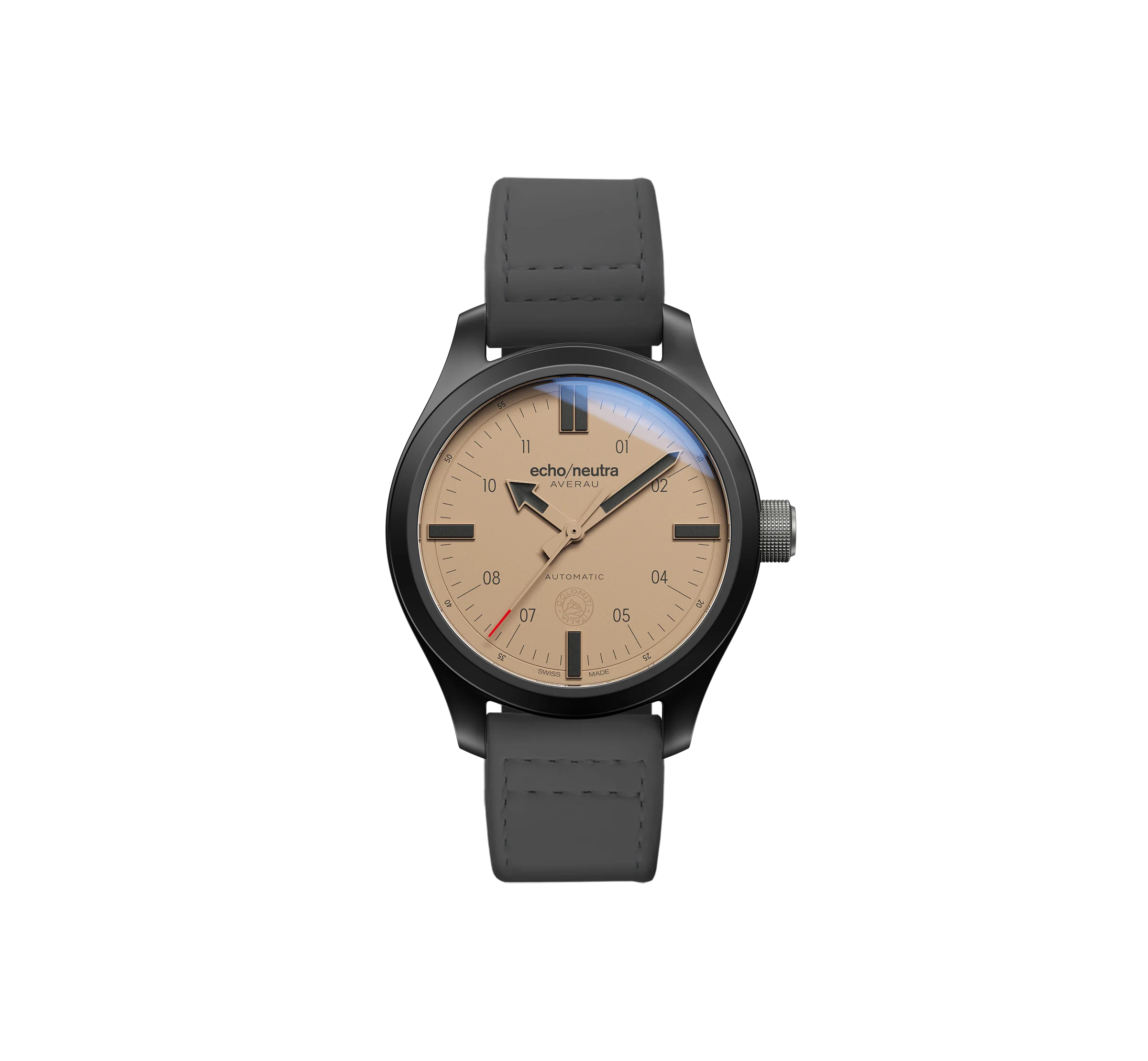
In brief. The Averau 42 Ceramic Sand collection is more than a dial refresh because its TiFrame architecture turns a familiar material tradeoff into the watch’s defining engineering idea.[1] [2] [3] [4] [5] [6] [7] [8]
Why Ceramic Needs a Titanium Skeleton
The Averau 42 Ceramic Sand arrived on 8 August 2026 in a three-hand model and an automatic chronograph. Both place a matte black ceramic shell around an internal grade 2 titanium structure called TiFrame, which continues through the lugs. The shared architecture, not merely the dial colour, is what makes the pair a coherent release.[1] [2]
Ceramic offers a hard, visually dense surface, but hardness is not the same as tolerance of sharp impacts. The TiFrame concept separates those jobs: the outer shell supplies the ceramic appearance and scratch-resistant proposition, while a metal structure occupies the load-bearing route through the case and lugs. The sources describe that arrangement, though they do not publish comparative breakage data.[2] [1]
This separation also makes repair questions more precise. A damaged exterior shell, frame, lug interface or movement would involve different parts and skills. The sources do not describe modular replacement procedures, but the disclosed architecture at least allows a prospective owner to ask the maker which layer can be replaced and how the case is opened without treating it as one undifferentiated ceramic object.[2]
One Diameter, Two Very Different Profiles
The three-hand case is 42 mm across, 10.5 mm thick and 51.5 mm from lug to lug. Those figures make it broad and long, but relatively slim for a modern automatic sports watch. The fixed numbers matter more than assumptions about titanium lightness because most of the visible shell is ceramic and no complete watch weight is stated in the cited material.[3]
The chronograph keeps the 42 mm diameter and 51.5 mm length but increases thickness to 14.6 mm. A difference of 4.1 mm is large enough to change cuff clearance, visual mass and how the watch settles on a smaller wrist. Shared styling should not obscure that the two versions offer materially different wearing propositions.[3] [4]
Because the diameter and length are fixed, thickness is the clearest numerical distinction between the cases. The three-hand model distributes its footprint in a flatter form, whereas the chronograph stacks more movement and case depth over the same wrist area. Trying both would remain preferable to predicting comfort from diameter alone.[3] [4]
The Field-Watch Hardware Beneath the Sand Dial
Both versions use sapphire crystals and carry a 100-metre water-resistance rating. That specification supports ordinary daily exposure and gives the ceramic construction a practical context beyond display use. It does not turn the watch into a dedicated diver, and the sources do not document a dive bezel or an independent pressure test.[5]
The TiFrame extends through the lugs, so the strap attachment area is part of the structural story rather than an isolated ceramic projection. The sand-coloured dial and matte case create the immediate visual effect, but sapphire and the stated water resistance make the release more than a colour exercise. Long-term seal replacement and case-part availability remain ownership questions.[2] [5]
A 100-metre rating also establishes the limit of the maker’s practical promise. It supports a field-watch reading, but it should not be translated into evidence about impact resistance or ceramic toughness. Water sealing and response to a blow are separate engineering questions, and only the former receives a stated specification here.[2] [5]
Two Sellita Movements for Two Jobs
The three-hand watch uses the Sellita SW200-1 with a stated 41-hour power reserve. It is a familiar automatic architecture and suits the simpler, thinner case. The evidence establishes the calibre and reserve, not the delivered rate of any individual watch, its regulation standard or how the movement performs once cased.[6]
The chronograph uses the Sellita SW510B and carries a stated reserve of at least 52 hours. Its longer reserve accompanies a more complex display and substantially thicker case. Choosing between the two is therefore not only about adding elapsed-time functionality; it also changes the movement family, service task, reserve and physical profile.[6] [7]
What the Material Argument Costs
Published prices start at EUR 970 for the three-hand watch and EUR 1,970 for the chronograph. The near doubling buys the chronograph movement and function while retaining the same ceramic and titanium case concept. At the entry price, the hybrid structure is unusually central to the value argument because it is not hidden behind a precious-metal premium.[8] [2]
Price and architecture still do not answer durability. Neither cited source provides an independent impact comparison, a long-term report on the ceramic shell or measured movement results. A careful assessment can credit the clarity of the TiFrame solution while leaving its real advantage unquantified. That boundary is important when material language is the principal sales argument.[1] [8]
The Dial Brief view
The clearest reason to consider the Averau is not the sand colour but the legible engineering proposition. Ceramic changes how the case looks and resists scratches; titanium is placed where the maker says reinforcement matters. Buyers should decide whether the 42 mm diameter and 51.5 mm length suit them, then choose between the thinner, less expensive three-hand watch and the much thicker chronograph. The construction is credible on paper, but it should be valued as a disclosed design solution rather than as proof of superior impact survival. Service comfort will also depend on access to the relevant Sellita calibre and to brand-specific case parts.
What we know, and what remains unconfirmed
The available sources explain the construction and specifications but provide no independent impact test, long-term ceramic-case assessment or measured movement performance.