Bernhard Lederer Defines Independence as Responsibility, Not Freedom
For Bernhard Lederer, purposeful innovation means using independence to pursue a mechanical question while accepting full responsibility for whether the answer is useful. His restoration background and the CIC 39 mm show how that principle moves from philosophy into an escapement.
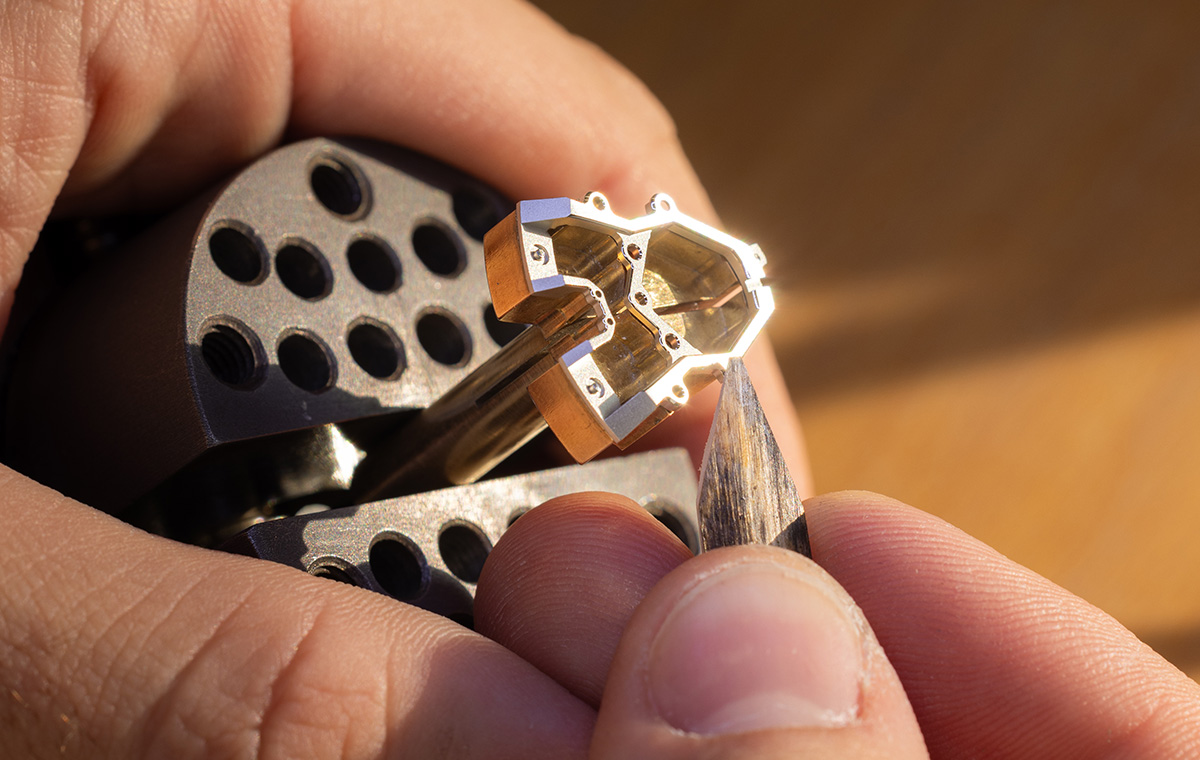
In brief. Lederer’s most useful contribution here is a standard for judging innovation: independence creates the time to pursue an idea, but also removes every excuse when that idea lacks mechanical purpose.[1] [2] [3] [4] [5] [6] [7] [8]
Restoration as a School of Mechanical Intent
Bernhard Lederer traces his approach through more than four decades of mechanical curiosity and restoration work. During his apprenticeship at the Wuppertal Watch Museum, he restored historic watches and studied the choices earlier makers made when solving practical problems. Repair therefore became a method of reading mechanisms, not simply returning them to operation.[1] [2]
That background matters because restoration exposes both elegant ideas and their constraints. A watchmaker sees where friction accumulates, where a solution depends on obsolete production methods and where later intervention has altered an original system. Lederer’s retrospective frames experimentation as a continuation of that close reading, with historical mechanisms serving as evidence rather than decoration.[1] [2]
Why History Is a Starting Point, Not a Template
Lederer describes innovation as reconsidering historical ideas with current materials, tolerances and manufacturing methods. That definition rejects the fantasy of invention without precedent. It also avoids simple reproduction because the earlier mechanism becomes a question to investigate under different technical conditions.[3]
He also says a new mechanism should solve a technical problem or improve understanding, rather than exist only to appear different. The test is demanding because visual novelty cannot carry the argument by itself. A collector should be able to identify the question, the mechanical response and the reason the response could not be reduced to a conventional solution.[3] [4]
Independence as Responsibility
Lederer characterises independence as responsibility because decisions about feasibility and acceptable compromise rest with the maker. Freedom from a large organisation creates time and authority, but it also removes the excuse that an anonymous committee weakened the idea. The maker owns both the research path and the stopping decision.[5]
Long experimental cycles inevitably include abandoned prototypes and approaches that do not earn production. Seen through Lederer’s framework, failure is useful when it clarifies a mechanism, but not when it becomes mythology used to protect an unclear result. More than four decades of work provide context for the position without proving that every finished watch meets it equally.[1] [5]
How the CIC Makes the Philosophy Concrete
The CIC 39 mm uses a patented dual detent escapement with two remontoirs d’égalité. The arrangement makes the philosophical claim inspectable: two gear trains and constant-force mechanisms are exposed through the caseback, allowing the owner to see that the architecture is not a hidden narrative added after design.[6] [7]
The calibre contains 212 hand-finished components. Component count alone is not evidence of better timekeeping, but here it identifies the scale of the construction and finishing task. The two remontoirs and dual detents must still be judged by execution, adjustment and durability, areas for which the cited sources do not provide independent test results.[6] [7]
A Collector’s Test for Purposeful Innovation
The rose-gold CIC case measures 39 mm across and 10.75 mm thick. Those proportions give the complex mechanism a relatively restrained exterior, supporting Lederer’s argument that difference need not rely on visual excess. They describe size, however, not comfort, rate stability or resistance to everyday shocks.[8]
The useful collector test is to connect purpose, mechanism and evidence. Lederer supplies a clear account of why mechanisms should exist, and the official technical description identifies how the CIC embodies it. What remains unavailable is an independent rate test and a full assessment of production consistency and serviceability. Purpose is a strong beginning, not the final proof.[4] [8]
The Dial Brief view
Collectors can use Lederer’s standard as a disciplined filter. Ask what problem a mechanism addresses, which historical idea it reopens, what present manufacturing makes possible and what evidence demonstrates the result. The CIC gives unusually clear mechanical answers through its dual detents, twin remontoirs and visible gear trains. Yet conceptual coherence does not substitute for independent rate measurements, production records or service experience. The strongest reading is neither worship of complexity nor suspicion of all novelty. It is a demand that architecture, execution and stated purpose remain aligned.
What we know, and what remains unconfirmed
The interview is a maker’s retrospective and the official site states the technical proposition; neither source supplies an independent rate test or a full production and serviceability audit of the CIC 39 mm.