Beaucroft Refines the Seeker Into a More Capable Arc
Beaucroft The Arc is an exercise in coordinated refinement. One extra millimetre of diameter, a wider strap, doubled water resistance, added lume and a hardened polished bezel shift the familiar Seeker shape toward a more capable everyday watch without abandoning the arched Cambridge-inspired case.
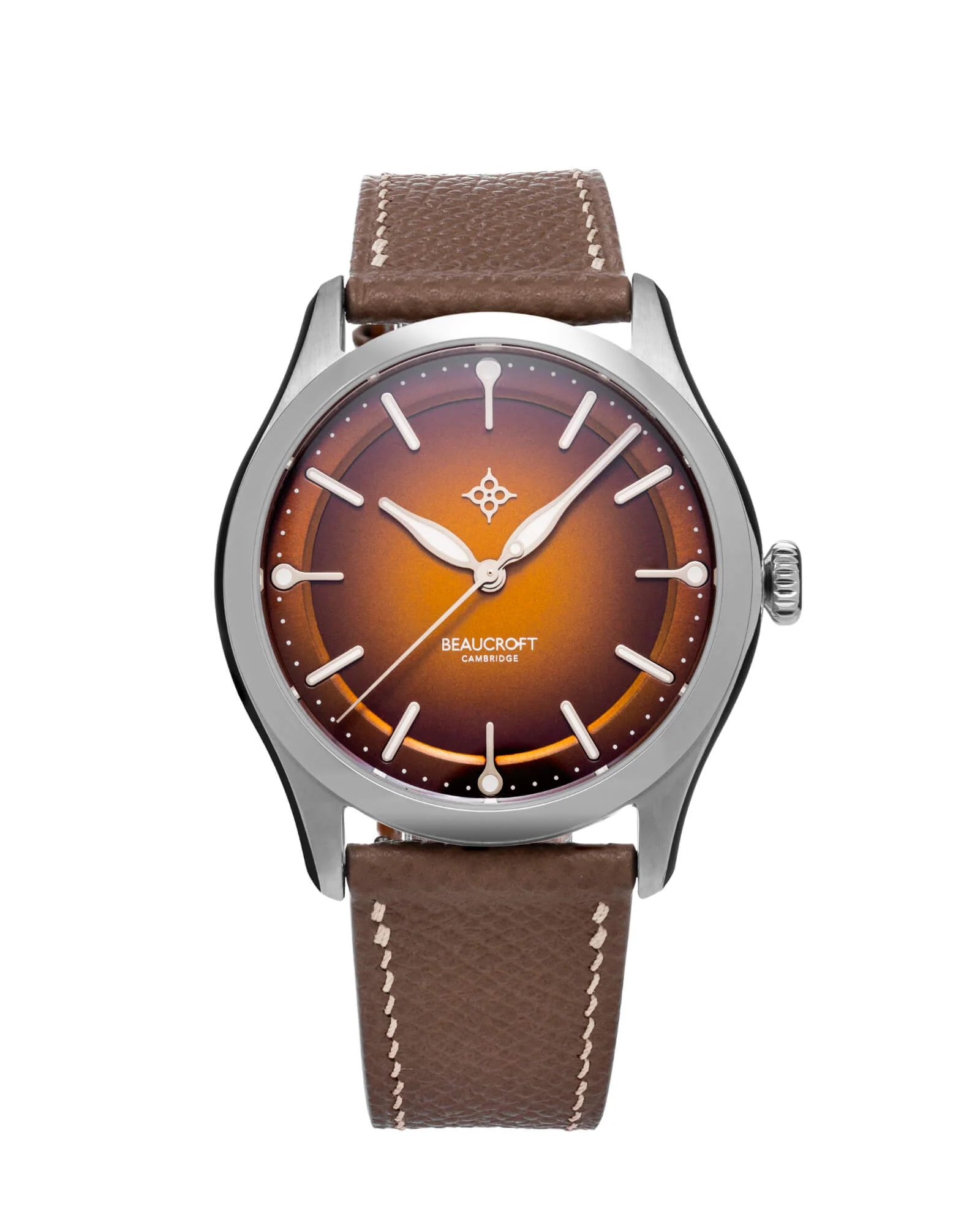
In brief. The Arc earns its new name through a coordinated set of small changes that turn the Seeker’s dress-casual shape into a more convincing everyday watch.[1] [2] [3] [4] [5] [6] [7] [8]
The Seeker Problem the Arc Addresses
The Arc grows from the Seeker’s 37mm diameter to 38mm while retaining a 43.5mm lug-to-lug length. Case thickness is 10.3mm and strap width increases from 18mm to 20mm. These documented points define the factual boundary for this part of the story. Read together, they show why the seeker problem the arc addresses is material to the watch rather than a detachable specification or decorative aside.[1] [2]
Keeping the lug-to-lug length while increasing diameter prevents the revision from simply becoming a larger watch. The wider strap and modest thickness instead rebalance the familiar case for a stronger everyday stance. This is the useful collector reading of the evidence: define the predecessor and the practical gap Beaucroft chose to close. The conclusion stays within the cited material and does not turn a launch specification or a single review observation into a broader performance claim.[1] [2]
What One Extra Millimetre Enables
Water resistance rises from 50 metres on the Seeker to 100 metres on The Arc. The polished bezel receives a hardening treatment and lume appears on hands, indexes and cardinal numerals. These documented points define the factual boundary for this part of the story. Read together, they show why what one extra millimetre enables is material to the watch rather than a detachable specification or decorative aside.[3] [4]
The additional millimetre creates room for clearer proportions while the polished bezel remains visually important. Hardening and expanded lume address the vulnerabilities that can accompany a polished, dress-casual design. This is the useful collector reading of the evidence: connect revised size, lugs and strap width to the design outcome. The conclusion stays within the cited material and does not turn a launch specification or a single review observation into a broader performance claim.[3] [4]
Water, Lume and Surface Hardening
Four fumé sun-ray colours are offered: burnt orange, teal, denim blue and olive green. The no-date Miyota 9039 automatic calibre runs at 4Hz with a 42-hour stated reserve. These documented points define the factual boundary for this part of the story. Read together, they show why water, lume and surface hardening is material to the watch rather than a detachable specification or decorative aside.[5] [6]
Doubling the water rating changes the confidence with which the watch can be worn around ordinary exposure. Lume on hands, indexes and cardinal numerals similarly extends the design beyond well-lit, formal settings. This is the useful collector reading of the evidence: document the coordinated everyday-use upgrades. The conclusion stays within the cited material and does not turn a launch specification or a single review observation into a broader performance claim.[5] [6]
Colour Outside, Workhorse Inside
The United Kingdom price is £525. The arched mid-case remains a reference to Cambridge’s Bridge of Sighs. These documented points define the factual boundary for this part of the story. Read together, they show why colour outside, workhorse inside is material to the watch rather than a detachable specification or decorative aside.[7] [8]
Four fumé colours preserve the expressive side of the collection, while the no-date Miyota keeps the dial symmetrical and mechanically straightforward. The movement specification is familiar rather than experimental, which suits the refinement brief. This is the useful collector reading of the evidence: assess the four dials and the Miyota 9039 choice. The conclusion stays within the cited material and does not turn a launch specification or a single review observation into a broader performance claim.[7] [8]
Why Refinement Can Be a Real Launch
The Arc grows from the Seeker’s 37mm diameter to 38mm while retaining a 43.5mm lug-to-lug length. Case thickness is 10.3mm and strap width increases from 18mm to 20mm. These documented points define the factual boundary for this part of the story. Read together, they show why why refinement can be a real launch is material to the watch rather than a detachable specification or decorative aside.[1] [2]
At this price, the launch is persuasive because each revision answers a practical question. Long-term accuracy, coating durability and servicing still require evidence that a short review cannot provide. This is the useful collector reading of the evidence: place the price and measured changes within Beaucroft’s range. The conclusion stays within the cited material and does not turn a launch specification or a single review observation into a broader performance claim.[1] [2]
The Dial Brief view
For collectors, the useful comparison is not whether every individual change is dramatic. It is whether the changes reinforce one another. The Arc keeps a short lug-to-lug measurement while improving water resistance, visibility and surface durability. The no-date movement preserves a clean dial, and the four colours keep personality in the foreground. At £525, its argument is cumulative: familiar architecture made more usable through a disciplined sequence of revisions.
What we know, and what remains unconfirmed
The available review provides short-term editorial wear impressions; accuracy, hardening durability and long-term service outcomes are not independently measured.