BA111OD Makes Skeletonisation a Daily-Wear Proposition
BA111OD treats skeletonisation as a daily-wear format rather than a display-case complication. The Chapter 7 Skeleton exposes a Swiss automatic movement inside a manageable steel case, then supports the visual drama with 100-metre water resistance, a practical bracelet clasp and pricing below four figures in Swiss francs.
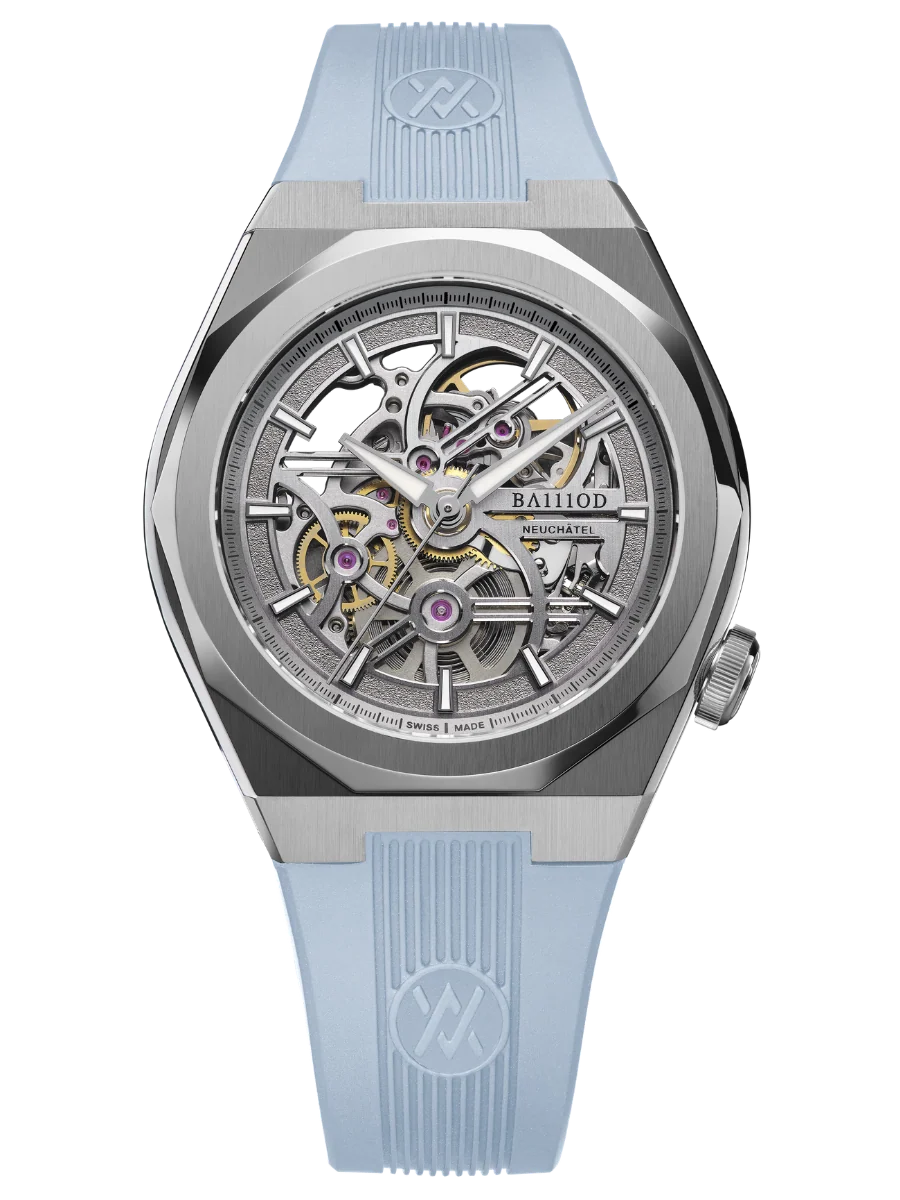
In brief. The Chapter 7 Skeleton is notable less for visual exposure alone than for combining that exposure with legibility, bracelet adjustment and water resistance at a price usually occupied by closed-dial watches.[1] [2] [3] [4] [5] [6] [7] [8]
Openworked Dial, Skeleton Movement
The Chapter 7 Skeleton uses a Swiss-made Soprod P024-SQ automatic skeleton movement. The 316L steel case is 40mm wide, 47mm lug to lug and 10.5mm thick. These documented points define the factual boundary for this part of the story. Read together, they show why openworked dial, skeleton movement is material to the watch rather than a detachable specification or decorative aside.[1] [2]
The exposed calibre is therefore structural, not a printed imitation of depth. The dimensions keep that open architecture within proportions that can plausibly serve as an everyday steel watch. This is the useful collector reading of the evidence: clarify the construction before assessing the aesthetics. The conclusion stays within the cited material and does not turn a launch specification or a single review observation into a broader performance claim.[1] [2]
An Integrated Case That Stays Manageable
The movement has 25 jewels and a stated 38-hour power reserve. The watch is rated to 100 metres of water resistance. These documented points define the factual boundary for this part of the story. Read together, they show why an integrated case that stays manageable is material to the watch rather than a detachable specification or decorative aside.[3] [4]
The asymmetric case and off-centre crown give the watch a distinct outline without pushing the diameter beyond 40mm. Its 100-metre rating adds practical reassurance that many visually delicate skeleton watches omit. This is the useful collector reading of the evidence: document dimensions, finishing and the off-centre crown. The conclusion stays within the cited material and does not turn a launch specification or a single review observation into a broader performance claim.[3] [4]
Bracelet, Adjustment and Water Resistance
The steel H-link bracelet includes a tool-free micro-adjustable folding clasp. The steel version costs CHF 955, while the rubber-strap version costs CHF 895. These documented points define the factual boundary for this part of the story. Read together, they show why bracelet, adjustment and water resistance is material to the watch rather than a detachable specification or decorative aside.[5] [6]
A tool-free micro-adjust clasp matters more in daily use than another decorative flourish, because wrist size changes across heat and activity. The two price options also let buyers choose bracelet utility or a lower-cost rubber configuration. This is the useful collector reading of the evidence: test the daily-wear proposition against practical features. The conclusion stays within the cited material and does not turn a launch specification or a single review observation into a broader performance claim.[5] [6]
What the Soprod P024-SQ Provides
The crown sits at four o’clock within an asymmetric case architecture. Fratello found the open display legible and the integrated bracelet comfortable, while noting conventional spring bars complicate strap changes. These documented points define the factual boundary for this part of the story. Read together, they show why what the soprod p024-sq provides is material to the watch rather than a detachable specification or decorative aside.[7] [8]
The Soprod movement supplies Swiss origin, automatic winding and visible mechanics, but its stated reserve is conventional. The hands-on report supports comfort and legibility while also identifying less convenient spring-bar changes. This is the useful collector reading of the evidence: set expectations for architecture, reserve and servicing context. The conclusion stays within the cited material and does not turn a launch specification or a single review observation into a broader performance claim.[7] [8]
Accessibility Without False Equivalence
The Chapter 7 Skeleton uses a Swiss-made Soprod P024-SQ automatic skeleton movement. The 316L steel case is 40mm wide, 47mm lug to lug and 10.5mm thick. These documented points define the factual boundary for this part of the story. Read together, they show why accessibility without false equivalence is material to the watch rather than a detachable specification or decorative aside.[1] [2]
The price broadens access to a complete skeleton movement without erasing differences in hand finishing, movement exclusivity or decoration found much higher in the market. Its value claim is practical and visual, not equivalence. This is the useful collector reading of the evidence: explain why price matters while avoiding comparisons that erase finishing differences. The conclusion stays within the cited material and does not turn a launch specification or a single review observation into a broader performance claim.[1] [2]
The Dial Brief view
The collector case rests on integration rather than spectacle alone. Openworking supplies the immediate attraction, but dimensions, water resistance and clasp adjustment decide whether the watch can become routine. The modest power reserve and conventional spring bars remain part of that calculation. At this price, the Chapter 7 should not be judged as a substitute for hand-finished haute horlogerie; it is better understood as an accessible, wearable expression of exposed mechanics.
What we know, and what remains unconfirmed
Fratello labels the feature as preferred-position content; its wear observations are useful but should be presented with that commercial disclosure, and long-term movement accuracy was not measured.